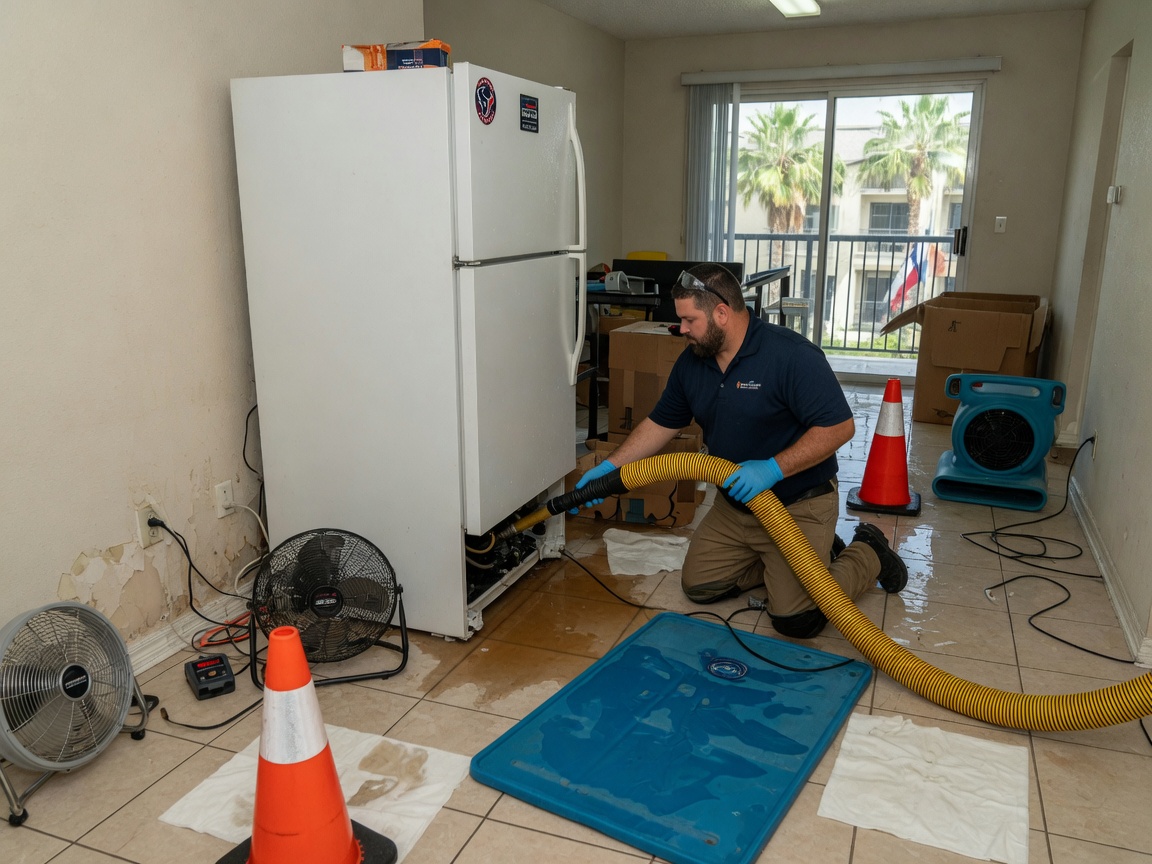
Houston's subtropical climate brings high summer humidity that keeps moisture trapped inside walls and under floors long after an appliance leak stops. In neighborhoods like the Heights and Montrose, many homes built before 1970 have original plumbing runs that corrode behind refrigerators, washers and dishwashers, allowing water to travel under cabinets and into subfloors before anyone notices.
Harris County properties near the bayou system often sit on clay soils that expand and contract, creating small gaps where water migrates farther than expected. We use moisture meters and thermal imaging to trace these paths instead of guessing, then set up air movers and dehumidifiers sized for the actual cubic footage rather than the visible puddle.
Mild winters do not stop the problem; indoor heat combined with outdoor dampness still drives condensation on cold appliance lines. Downtown and Midtown condos with stacked laundry rooms add another layer because leaks travel vertically through shared walls and require coordination with multiple units.
We document every step for insurance adjusters and leave equipment in place only as long as readings show the structure has returned to the dry standard for the area, avoiding both under-drying that leads to hidden mold and over-drying that cracks older wood trim common in River Oaks and Heights homes.
Technician insight
In Houston, the thing that catches most people out with Appliance Leak Clean-up & Drying is how quickly high summer humidity lets moisture travel under tongue-and-groove floors in pre-1970 Heights and Montrose homes; if you stop at the visible puddle you will miss the section that later grows mold.
Washing Machine Leak in a Montrose Bungalow
Water from a supply line soaked through the laundry room floor and reached the adjacent kitchen in a 1960s bungalow. We mapped moisture under the hardwood, extracted from the subfloor, and ran drying equipment for four days until readings matched the rest of the house. The owners avoided cabinet replacement and returned to normal use without mold issues.
Appliance Leak Clean-up & Drying Services We Offer
✓Refrigerator Leak Extraction
Remove water from behind and under refrigerators, pull back flooring if needed, and dry the subfloor before mold sets in humid Houston summers.
✓Washing Machine Water Damage Drying
Extract standing water from laundry rooms, treat affected drywall and baseboards, and run commercial drying equipment to reach hidden moisture in older Heights and Montrose homes.
✓Dishwasher Appliance Cleanup
Address leaks under kitchen cabinets, remove saturated insulation, and dry cabinetry and flooring to prevent swelling common in Midtown and Downtown units.
✓Ice Maker Line Leak Restoration
Locate and dry water from behind refrigerators supplied by ice maker lines, focusing on areas where slow leaks travel into adjacent rooms in River Oaks and Sugar Land homes.
✓Water Heater Appliance Leak Cleanup
Contain and extract water from water heater failures, protect surrounding finishes, and apply targeted drying in garages and utility closets typical of Katy and Pearland properties.
Appliance Leak Clean-up & Drying Cost in Houston, TX
| Service | Typical Range | What Affects It |
|---|---|---|
| Initial Assessment and Moisture Mapping | $125–$225 | Varies with home age and number of rooms checked in older Heights or Montrose properties. |
| Extraction and Equipment Setup | $350–$650 | Depends on water volume and whether subfloor access is required. |
| Daily Drying and Monitoring | $175–$300 per day | Typical 3–5 days in Houston humidity; longer in stacked condo layouts. |
| Final Clearance Report | $75–$150 | Includes meter readings for insurance or real estate needs. |
Ranges are typical for Houston, TX and confirmed with an exact written quote before any work starts.
How it works
- 1
On-Site Assessment
We arrive at the address, locate the appliance source, and map moisture migration using meters and imaging while noting construction details common in the neighborhood.
- 2
Water Extraction
Remove standing water with portable extractors and lift affected flooring or baseboards only where necessary to reach trapped moisture.
- 3
Drying Setup
Place air movers, dehumidifiers, and if needed, wall cavity drying tubes sized for Houston humidity levels and the square footage involved.
- 4
Daily Monitoring
Return each day to check moisture readings until the structure meets dry standards, then remove equipment and document final conditions.
Pricing
Upfront quotes based on affected square footage, access, and drying time required; no hidden fees.