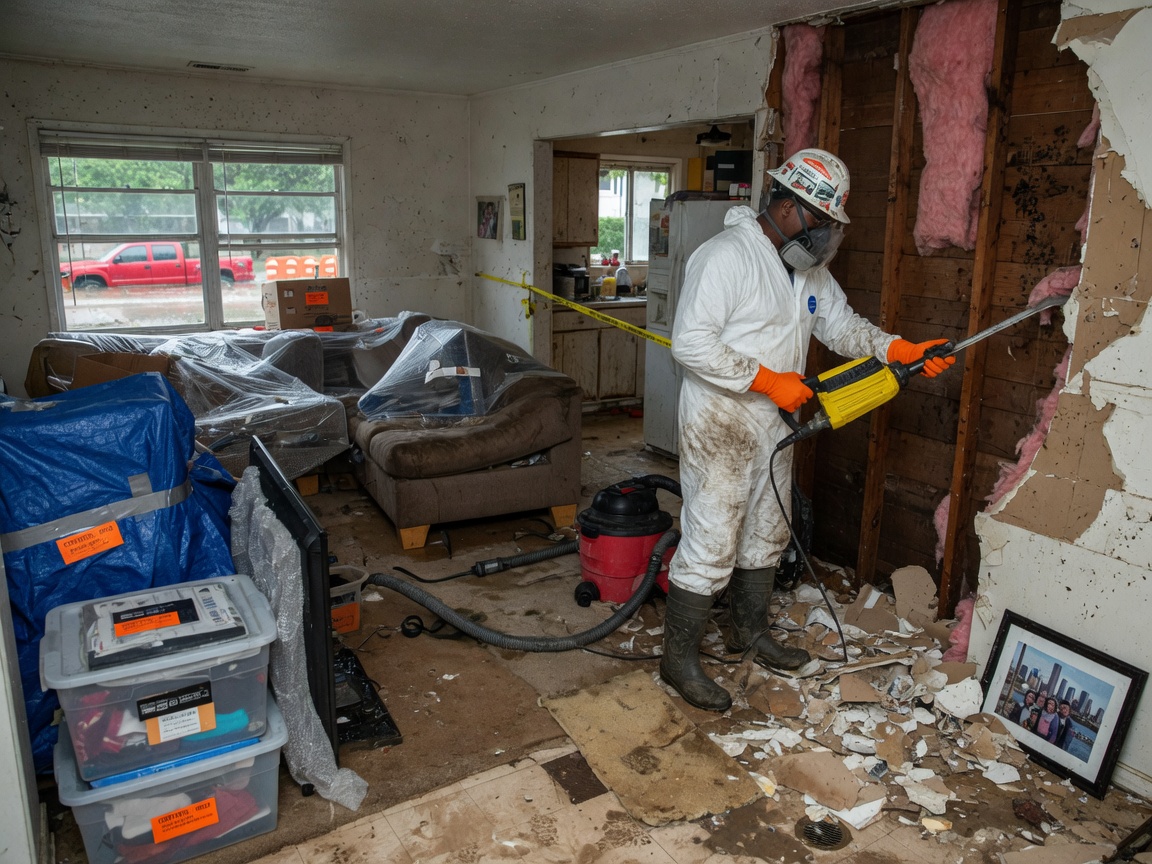
Houston's subtropical climate brings high humidity year-round, so water from appliance leaks in kitchens or laundry rooms quickly saturates drywall, subfloors, and insulation in homes built before 1980 in the Heights and Montrose. Rapid demolition of affected plaster and lath or sheetrock prevents hidden mold colonies that form within 48 hours when moisture lingers behind cabinets or under hardwood. Crews protect salvageable contents by wrapping furniture and boxing documents before any walls come down, then separate construction debris for Harris County landfill rules that differ from regular household waste.
River Oaks and Midtown properties often sit on clay soils that shift during heavy summer rains, so floor joists near washing machine leaks can rot faster than in drier inland areas like Katy or Sugar Land. Technicians remove only the minimum material needed while bracing load-bearing walls, then stage dehumidifiers directly on the slab to pull moisture from concrete before reinstallation. This approach keeps insurance claims focused and avoids unnecessary structural work common when general contractors over-demo entire rooms.
Downtown high-rises and Pearland townhomes frequently have appliance leaks that travel through shared walls or stacked plumbing chases. Flood demolition here requires coordination with building management for elevator use and after-hours access, plus careful separation of wet carpet padding from hardwood that can be sanded and refinished rather than replaced. Content protection includes moving electronics and artwork to climate-controlled storage before any cutting begins.
Technician insight
In Houston the thing that catches most people out with Flood Demolition & Content Protection is how fast humidity in the Heights and Montrose turns a small washing-machine leak into hidden rot behind original plaster; homeowners often try to dry in place and end up replacing twice the material later.
Montrose townhome appliance leak
A refrigerator supply line failed overnight and soaked the kitchen subfloor plus two feet up the drywall. We found water had traveled under the adjacent hardwood into the dining room. Selective demo removed only the wet sections, contents were wrapped and moved to the living room, and debris was hauled same day so the homeowner could begin drying equipment placement without delay.
Flood Demolition & Content Protection Services We Offer
✓Wet Drywall and Insulation Removal
Cut and dispose of saturated sheetrock and fiberglass batts around leaking refrigerators or dishwashers to stop mold growth in humid Houston summers.
✓Hardwood Floor Demolition
Lift and remove buckled flooring and subfloor sections damaged by washing machine overflows while protecting adjacent rooms from dust.
✓Cabinet and Baseboard Extraction
Dismantle lower kitchen or laundry cabinets and trim where water has wicked up, preserving upper units and countertops when possible.
✓Content Wrapping and Staging
Cover and relocate furniture, rugs, and documents away from demolition zones to prevent secondary damage during appliance leak restoration.
✓Debris Hauling and Disposal
Load and haul water-damaged materials to permitted Harris County sites, separating drywall, wood, and carpet for proper landfill acceptance.
Flood Demolition & Content Protection Cost in Houston, TX
| Service | Typical Range | What Affects It |
|---|---|---|
| Kitchen drywall and insulation demo | $650–$1,200 | Depends on linear feet affected and whether cabinets must be removed first. |
| Hardwood floor section removal | $400–$850 | Varies with subfloor condition and square footage in older Heights homes. |
| Content wrapping and staging | $250–$500 | Based on volume of furniture and documents moved. |
| Full debris haul and disposal | $300–$600 | Includes landfill fees for mixed construction waste. |
Ranges are typical for Houston, TX and confirmed with an exact written quote before any work starts.
How it works
- 1
Site Assessment
Inspect appliance leak source, map water migration through walls and floors, and mark only the sections requiring demolition.
- 2
Content Protection
Wrap and move salvageable items to a dry staging area before any cutting begins.
- 3
Controlled Demolition
Remove wet materials using dust containment and negative air to protect unaffected areas of the home.
- 4
Debris Removal
Haul separated waste to approved disposal sites and document the load for insurance.
Pricing
Upfront quotes after on-site inspection; ranges reflect typical appliance leak jobs in single-family homes.