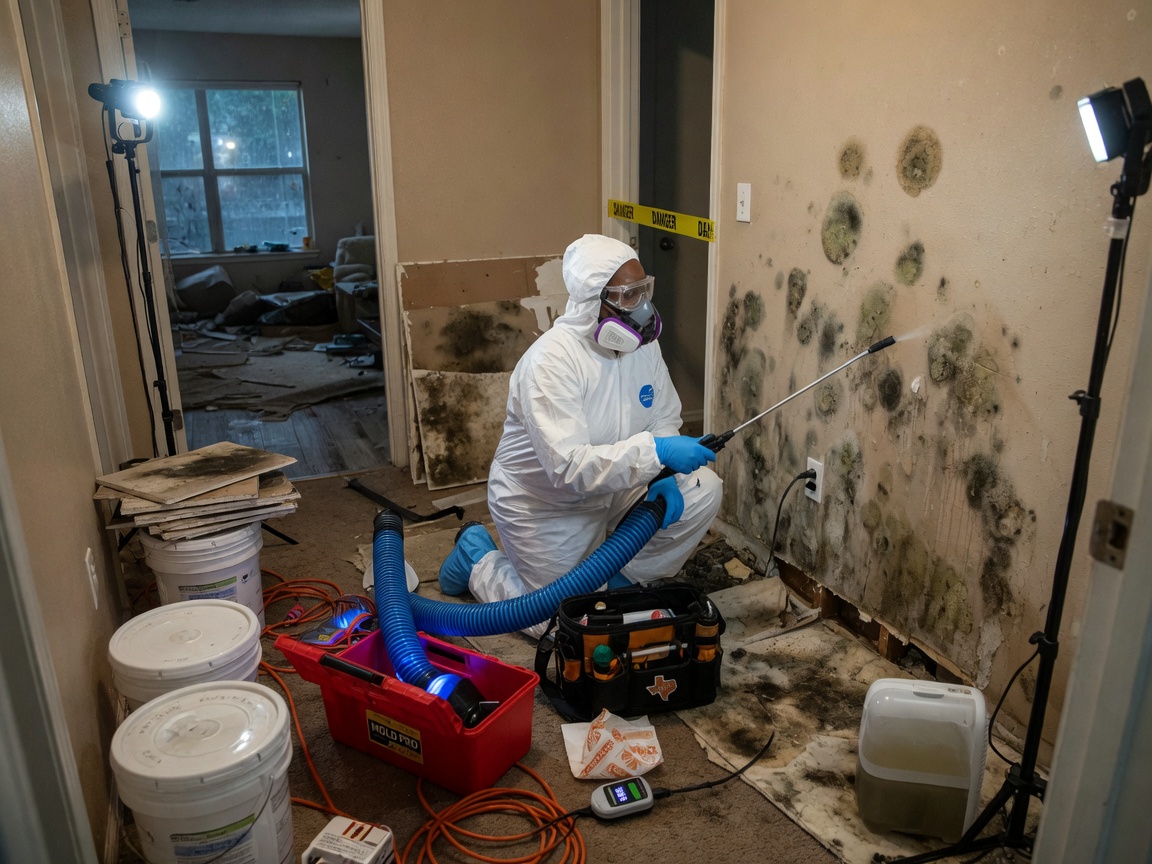
Houston's subtropical climate drives rapid mold growth after appliance leaks, especially during hot humid summers when indoor humidity stays elevated. Older homes in the Heights and Montrose often feature pier-and-beam construction with limited crawlspace ventilation, allowing moisture from washing machine or dishwasher leaks to linger under floors. We map moisture with thermal imaging and place commercial dehumidifiers sized for the square footage before visible colonies form. In Midtown and Downtown high-rises, slab leaks from refrigerators or ice makers can travel through concrete joints into neighboring units, requiring containment barriers to protect shared walls.
River Oaks and nearby properties in Harris County frequently have finished basements or lower-level utility rooms where appliance leaks soak into carpet padding or drywall bottoms. Our protocol includes removing baseboards, drying cavities with directed airflow, and applying EPA-registered antimicrobials only where moisture readings exceed 15 percent. Mild winters keep soil moisture high year-round, so we also check exterior grading around homes in Pearland and Sugar Land to prevent additional water entry that could restart growth after an appliance failure.
Katy and Sugar Land subdivisions built in the 1990s commonly use particleboard cabinetry that swells and supports hidden mold within days of a leak. We extract water from under cabinets, cut away saturated toe-kicks, and install temporary HEPA filtration to capture spores before they circulate through HVAC returns. This approach prevents the musty odor complaints that often appear weeks later when homeowners turn on air conditioning after a humid spell.
Technician insight
In Houston the thing that catches most people out with Emergency Mold Prevention is how fast humidity from a washing-machine leak climbs into particleboard cabinets and under pier-and-beam floors during our long humid summers. Homes in the Heights and Montrose built before 1980 rarely have enough ventilation, so moisture sits and mold starts within 48 hours even when the visible puddle is gone.
Washing Machine Leak In Montrose Bungalow
A 1970s bungalow in Montrose had a slow washer leak that soaked the laundry room floor and traveled under adjacent cabinets. We mapped elevated moisture in the crawlspace, ran dehumidifiers for four days, removed swollen toe-kicks, and treated the subfloor. Final readings stayed below 12 percent and the homeowner avoided any visible mold or odor issues.
Emergency Mold Prevention Services We Offer
✓Appliance Leak Moisture Mapping
We locate hidden moisture from refrigerator, washer, or dishwasher leaks using thermal cameras and pin meters before mold colonies establish in Houston homes.
✓Crawlspace Dehumidification After Leaks
Commercial-grade dehumidifiers sized for pier-and-beam homes in the Heights and Montrose pull humidity down quickly to stop mold on subfloors.
✓Slab Leak Containment Barriers
Plastic containment and negative air machines isolate moisture from appliance leaks in Midtown and Downtown condos to protect adjacent units.
✓Baseboard and Drywall Removal
We remove saturated baseboards and lower drywall sections in River Oaks homes so cavities can dry fully and prevent hidden mold behind finishes.
✓Cabinet and Toe-Kick Drying
Targeted drying and antimicrobial treatment for particleboard cabinets damaged by dishwasher or sink appliance leaks in Katy and Pearland homes.
Emergency Mold Prevention Cost in Houston, TX
| Service | Typical Range | What Affects It |
|---|---|---|
| Single-room appliance leak prevention | $450–$850 | Includes extraction, drying, and treatment; price rises with hidden moisture in subfloors. |
| Multi-room or crawlspace job | $950–$1,800 | Larger equipment and longer runtime needed in Heights pier-and-beam homes. |
| Slab containment and drying | $700–$1,400 | Common in Midtown and Downtown; barriers and negative air add cost. |
Ranges are typical for Houston, TX and confirmed with an exact written quote before any work starts.
How it works
- 1
Initial Assessment
We inspect the appliance leak source and take moisture readings in affected rooms, crawlspaces, and adjacent units in Harris County homes.
- 2
Water Extraction
Standing water is removed from floors and under cabinets using portable extractors sized for residential appliance leaks.
- 3
Drying And Humidity Control
Air movers and dehumidifiers run continuously while we monitor readings until levels return to safe ranges for Houston's climate.
- 4
Prevention Treatment
EPA-registered products are applied to dried surfaces and we advise on ventilation changes to reduce future mold risk.
Pricing
Pricing depends on square footage affected, number of rooms, and whether crawlspace or slab access is required.