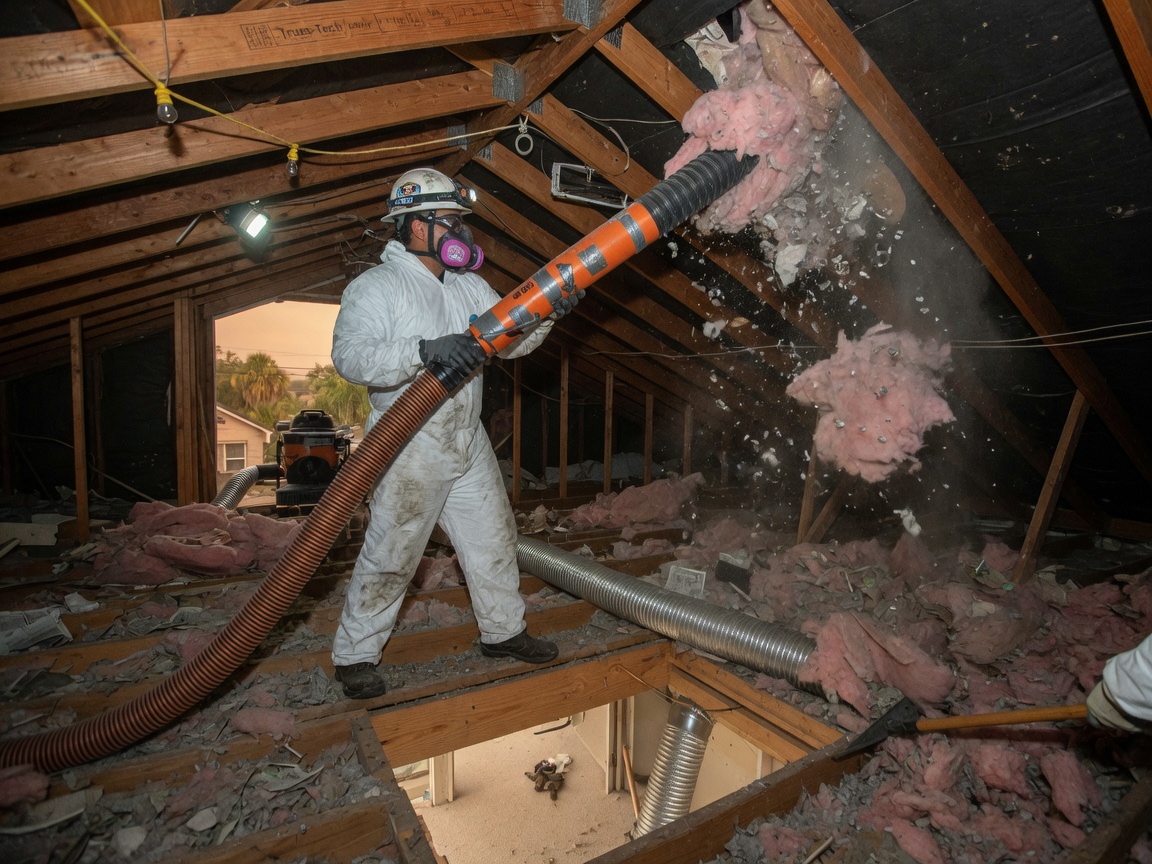
Houston's subtropical climate with hot humid summers means even small appliance leaks from refrigerators or washing machines quickly saturate insulation in older Heights bungalows and Midtown townhomes. Wet fiberglass or cellulose holds moisture against framing, and the mild winters never fully dry it out, leading to hidden mold growth within days. We extract saturated material from wall cavities and attics using containment and HEPA filtration to protect the rest of the structure.
River Oaks and Downtown high-rises often have spray-foam or rigid board insulation that traps water differently than the blown-in material common in Pearland and Sugar Land ranch homes. Appliance leaks under kitchens or laundry rooms frequently run along slab edges, soaking perimeter insulation that sits against Harris County clay soils. Removing it requires cutting precise access points and sealing against re-entry of humid air.
Katy and Sugar Land properties built on fill dirt see more slab-edge leaks that wick upward into base plates and floor insulation. We separate contaminated sections from dry areas, bag material on-site, and dispose according to local landfill rules for wet debris. This step prevents cross-contamination during the drying phase that follows appliance leak water damage cleanup.
Older Montrose homes with knob-and-tube wiring near insulation demand extra care during removal to avoid disturbing electrical runs. We document conditions with photos before starting and coordinate with electricians when needed so the job stays compliant with current Harris County residential codes.
Technician insight
In Houston the thing that catches most people out with insulation removal is how fast our humidity turns a small appliance leak under a kitchen sink into moldy cellulose in the wall cavities of 1920s Heights homes. The clay soils around Montrose and Midtown keep moisture trapped longer than people expect, so you have to pull the insulation farther than the visible water line or it just grows back.
Washing machine leak in a Heights bungalow
Water from a leaking washing machine in a 1930s Heights home had run under the laundry room cabinet and soaked the wall insulation. We found mold starting on the back side of the drywall two feet past the wet spot. After setting containment we removed the saturated fiberglass from three stud bays, cleaned the cavities, and left the space ready for drying and repair.
Insulation Removal Services We Offer
✓Attic Insulation Extraction
Remove water-soaked attic insulation above laundry rooms and kitchens after washing machine or dishwasher leaks to stop mold spread into living spaces.
✓Wall Cavity Insulation Removal
Cut targeted access in drywall to extract saturated fiberglass or cellulose from walls damaged by refrigerator or water heater leaks.
✓Crawl Space Insulation Disposal
Pull wet underfloor insulation in raised homes common in the Heights and replace vapor barriers compromised by appliance leaks.
✓Slab Edge Insulation Extraction
Address perimeter insulation along concrete slabs where leaks from ice makers or washing machines have wicked into the structure.
✓Mold-Contaminated Insulation Cleanup
Contain and remove insulation showing early mold growth after prolonged moisture from undetected appliance leaks in humid Houston summers.
Insulation Removal Cost in Houston, TX
| Service | Typical Range | What Affects It |
|---|---|---|
| Single wall cavity insulation removal | $350–$650 | Depends on access difficulty and square footage affected. |
| Attic section insulation extraction | $600–$1,200 | Higher when mold is present or multiple appliance leaks involved. |
| Crawl space perimeter removal | $450–$850 | Varies with vapor barrier condition and soil moisture. |
| Full room insulation removal | $900–$1,800 | Common after major washing machine leaks in older Heights homes. |
Ranges are typical for Houston, TX and confirmed with an exact written quote before any work starts.
How it works
- 1
Site Assessment
Inspect affected areas in the home to locate all wet insulation and trace the appliance leak source.
- 2
Containment Setup
Isolate work zones with plastic sheeting and negative air to keep spores from spreading to unaffected rooms.
- 3
Material Removal
Cut access points, bag wet insulation, and remove it from cavities, attics, or crawl spaces without disturbing dry sections.
- 4
Final Cleaning
HEPA vacuum surfaces and apply antimicrobial treatment where needed before handing off to drying crews.
Pricing
Pricing varies by home age, insulation type, and how many cavities are affected. Most jobs in central Houston neighborhoods fall in these ranges.