2026-08-20 · Frank Ramirez
Handling Appliance Leaks After Houston Heavy Rains
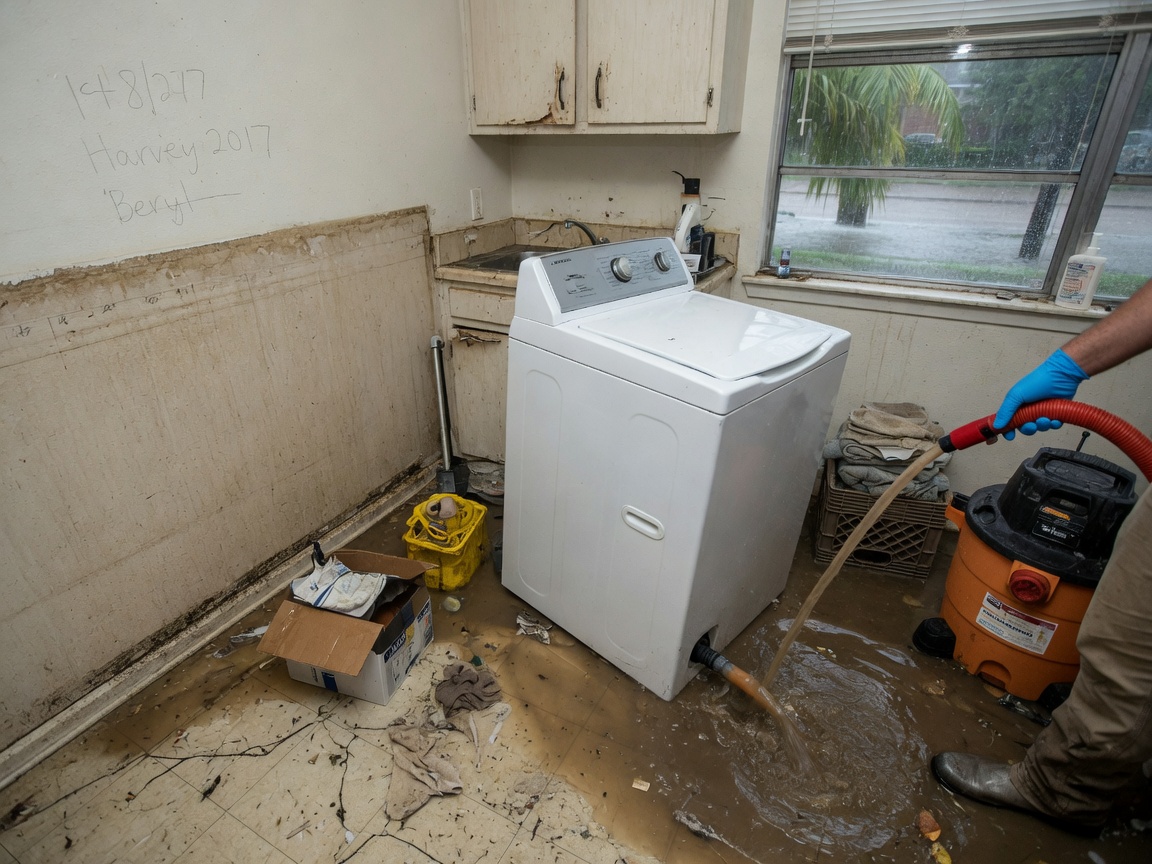
After Houston heavy rains, shut off the appliance water supply and power within minutes, then begin extraction and drying within 24 hours to prevent saturation in subfloors and walls common to Harris County homes.
Why Houston Rains Intensify Appliance Leaks
Houston's subtropical climate brings sudden downpours that raise groundwater levels and push moisture into foundations, especially in neighborhoods like the Heights and Midtown where many homes date to the 1940s and 1950s. A leaking 40-gallon water heater or dishwasher in these older structures can spread water laterally under hardwood floors faster than in newer builds in Katy or Sugar Land. High humidity after storms keeps materials wet longer, so a small drip that might dry on its own in drier regions turns into hidden saturation behind cabinets in River Oaks or Downtown condos. Terrain in low-lying pockets near the Houston Zoo or Museum of Fine Arts area channels runoff toward slabs, increasing pressure on appliance connections already stressed by age.
First Actions Homeowners Can Take
Locate the shutoff valve for the affected appliance right away and turn off electricity at the breaker if water nears outlets. Move contents to dry areas and document the spread with photos before any cleanup begins. In homes with slab foundations typical across Greater Heights, avoid walking on wet carpet or tile to prevent pushing water deeper into the subfloor. These steps buy time until extraction equipment arrives, but they do not replace professional drying because ambient humidity often exceeds 70 percent for days after heavy rain.
Extraction and Drying Methods That Work Here
Technicians use truck-mounted pumps for standing water followed by air movers and dehumidifiers sized for Houston's moisture load. Emergency Water Extraction removes bulk water from under appliances while Appliance Leak Clean-up & Drying targets the specific footprint of a washer or refrigerator leak. Thermal imaging locates moisture behind drywall in Midtown row houses where visual inspection misses it. In Pearland or Sugar Land properties with similar humidity, drying times extend to 5–7 days because outdoor air cannot be used for ventilation without introducing more moisture.
Mold Risks in Humid Harris County Homes
Mold can begin growing within 48 hours when relative humidity stays elevated after storms, a frequent condition in Montrose bungalows and Heights cottages. Spotting Hidden Appliance Water Damage in Humid Houston Homes outlines signs such as musty odors near baseboards or buckling in hardwood floors common to these older builds. Insulation removal becomes necessary when water reaches wall cavities, and anti-microbial treatments follow to address spores that thrive in the region's mild winters. Skipping these steps leaves residual moisture that reactivates with the next rainfall.
Cost Factors Specific to Local Conditions
Cleanup expenses vary with the volume of water, affected square footage, and whether hardwood or tile requires specialized drying. What Influences Appliance Leak Cleanup Costs in Houston breaks down how slab leaks in Downtown high-rises versus pier-and-beam homes in the Heights change the scope. Factors like access to the appliance, length of time water sat, and need for content drying all influence the final range. Homeowners in River Oaks often face higher labor costs due to larger square footage and more complex cabinetry.
RapidDry Impact Restoration operates from 2502 Center Street, Houston, TX 77007 with hours Monday through Friday 8am–6pm and Saturday 9am–2pm to respond after storms hit neighborhoods from Montrose to Downtown.